Enable SSL for JupyterHub
To secure communication on JupyterHub with SSL, follow these steps:
- Generate an SSL Certificate and Key: Run the following command to create an SSL certificate and private key.
openssl req \\
-newkey rsa:2048 -nodes -keyout domain.key \\
-x509 -days 365 -out jupyterhub.crt
- domain.key: The private key file.
- jupyterhub.crt: The SSL certificate file.
- Update the JupyterHub Configuration: Add the SSL certificate and key file paths to the JupyterHub configuration file.
c.JupyterHub.ssl_cert = '_usr_odp_3.3.6.2-1_jupyter_jupyterhub.crt'
c.JupyterHub.ssl_key = '_usr_odp_3.3.6.2-1_jupyter_domain.key'
If using Ambari to manage JupyterHub, add these properties in the JupyterHub configuration section of the Ambari UI, as shown in the screenshot.
- Save and Restart JupyterHub: After updating the configuration:
- Save the changes.
- Restart the JupyterHub service to apply the new SSL settings.
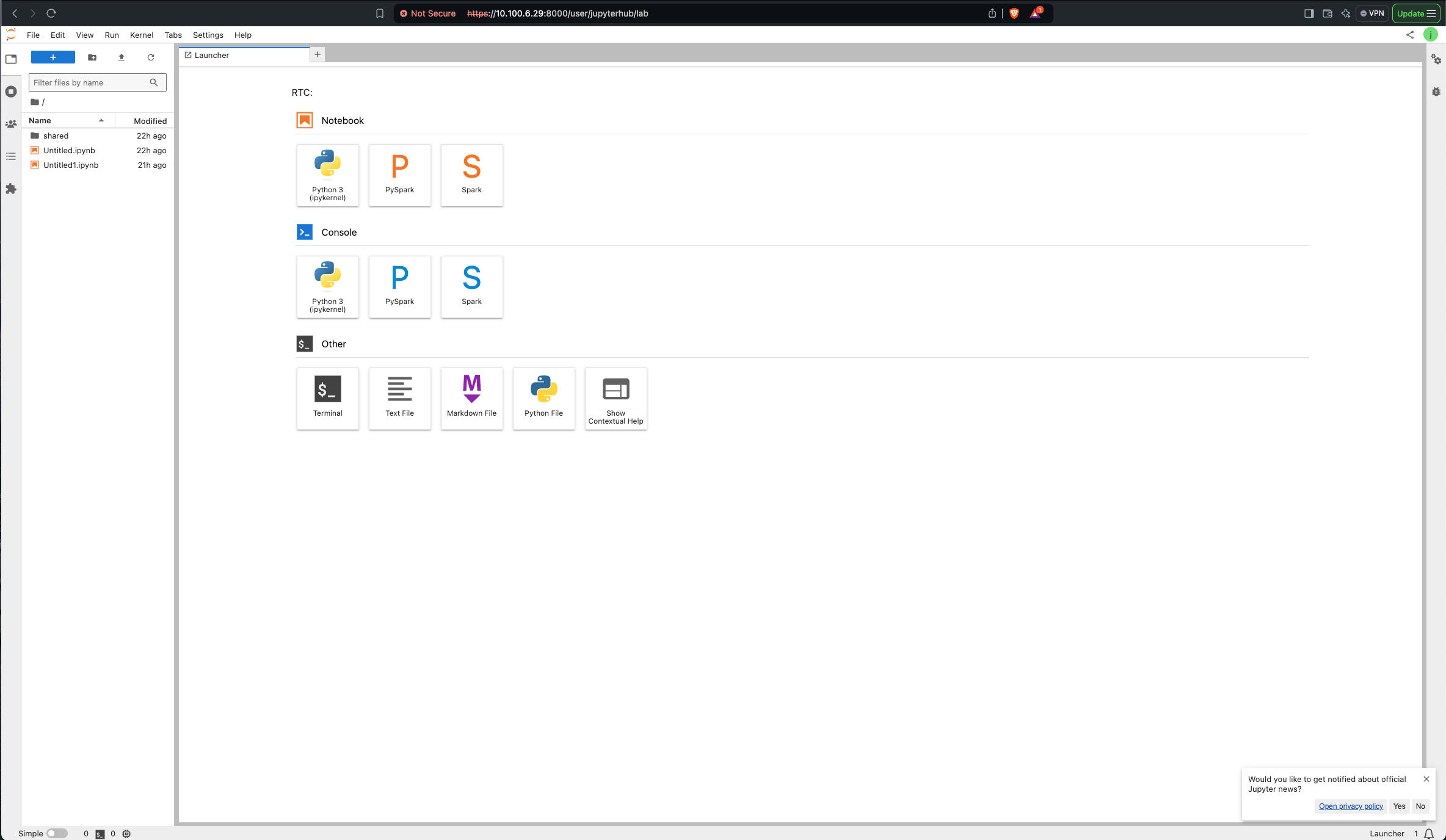
- Troubleshooting SSL Disabling: If you disable SSL and restart JupyterHub but encounter browser-related issues (e.g., connection errors), clear your browser cache to resolve the problem.